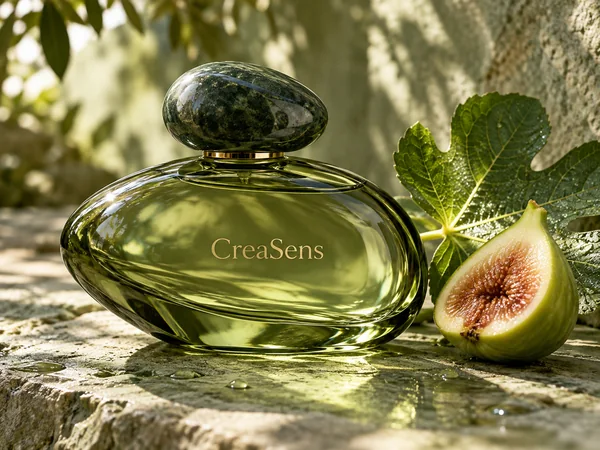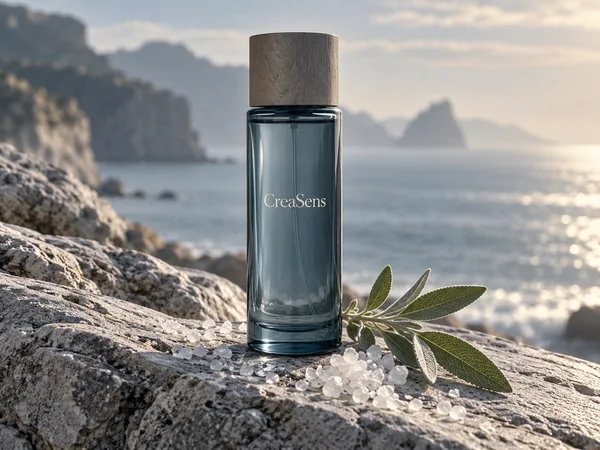
Use the name to explore and the code to verify
Display names such as Coastal Sage and Fig Atelier make a scent direction easier to remember. Include the sample code when discussing a specific record. Similar names can refer to different application versions, and identical display names do not make those versions interchangeable.
The CreaSens library groups records with matching scent descriptions while retaining individual application codes and indicative prices. This makes comparison easier without losing the identity of each version.
Source tags summarize the olfactive direction
The source tags for the Coastal Sage record include aromatic plants, salty, marine and citrus. These summarize how the source record describes the scent. They are not an ingredient list added to the formulation.
A coastal-sage display name and a marine or citrus tag therefore need not conflict. Check whether you are reading a curated display name, a source tag or the full note description: they serve different purposes.
Notes are descriptions, not a disclosed formula
This Coastal Sage record describes an aromatic family, with ambrette at the top, salt at the heart and sage at the base. The site retains that description to support smelling discussions. It does not establish the formula, natural content or safety documentation.
Ask about documentation relevant to your intended market, base and use case during the project discussion. A note illustration or conceptual product image cannot replace technical documentation.
Compare application versions individually
One scent group may contain perfume, personal-care, beauty or home-fragrance records. Confirm that the code added to your sample list is the version you want to discuss. Check the currency, unit and application when comparing prices.
Website prices are indicative CNY per kilogram. They do not establish stock availability, sample charges or final commercial terms. Minimum quantities, timing and base suitability still need confirmation.
Make the next conversation specific
Compare two or three candidate codes, read the complete note descriptions and add the relevant versions to your sample list. Include the target product, preferred and unwanted scents, budget and market when submitting your request.
If the existing directions are unsuitable, describe the desired scent and product conditions as an OEM fragrance development brief. An unconfirmed concept should remain a development request rather than a claim of an existing formulation or inventory.